I work on business questions that don't fit neatly inside one function.
Leadership teams bring me in when an important business question crosses functional boundaries. Sometimes defining the strategy is the work. Sometimes the strategy already exists, and the work is to make sure it addresses the right question and can work in practice, then lead the work to make it real.
James Rutherford · Strategic Advisor & Fractional Executive
Where the work starts
Usually with a question that seems straightforward and turns out not to be.
How I work
Engagements start in different places. The questions I work through are consistent, even when the work loops back as we learn more.
More on how I work →- 1
Define the business question.
I get specific about what leadership is trying to decide and whether the question has been framed correctly before anyone starts solving it.
- 2
Define the target state.
What should be different when the work succeeds: the business result and the way the business has to work to produce it. This is often where I see what technology or data could now make possible.
- 3
Work backward to build the roadmap.
What would have to be true, and in what order, to get from today to that target. It exposes dependencies before execution finds them the expensive way.
- 4
Evaluate the roadmap.
Which assumptions hold up, which capabilities already exist, and which gaps are real. Some of it can be proved quickly with what the business already has.
- 5
Make the strategic choices.
What to pursue, what to own, what to get from partners, where to invest, and what to stop. Sometimes the right choice is a narrower opportunity, or not proceeding.
- 6
Build, execute, and measure.
Turn the choices into changes in the organization, systems, and operating rhythm, and measure the result against the target state. Early results often send the work back a step. That's part of the work.
Examples of my work
A few of the business questions I've worked through, and what changed.
Retail Expansion
A retail expansion was being planned against roughly 2,000 target markets. I combined the company's financial model with its geographic sales forecasting and ran the analysis across every market on the list. About 400 held up, and the question changed from where to expand first to whether there was enough runway for the plan.
Read the story →Technology Commercialization
Ember had strong mesh-networking technology but not a complete solution customers could buy. Mapping what the customer outcome required showed which layer Ember should own and which should come from partners.
Read the story →Recruiting Performance
The Army generated more than 700,000 leads a year, but no one owned the path from lead to enlistment. Early, practical improvements using existing systems built the case for larger technology investment, and the redesigned model improved lead-to-enlistment conversion by 20%.
Read the story →Marketing Investment
ATI's marketing could see which keywords produced appointments, but not which produced patients. Connecting marketing sources to downstream revenue moved spend to what earned it, and revenue rose 10% with no increase in marketing spend.
Read the story →Retail Strategy & Operations
Sears Grand was a new store format on paper. I helped turn the strategy into an operating business: the operating model, systems and processes, and the organizations needed to open two pilot stores with more than 350 employees.
Read the story →
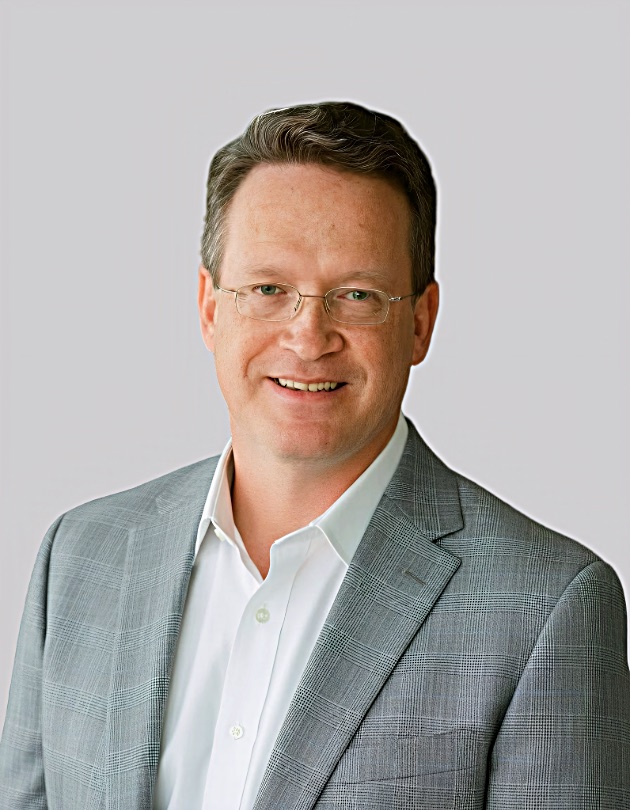
Who you'd be working with
James Rutherford
Strategic Advisor & Fractional Executive
The leaders who have worked with me keep bringing me into bigger, more ambiguous problems.
Across three decades, most of my major engagements have come from people who had seen my work firsthand: a former colleague bringing me back to launch a new retail platform, another pulling me into a national transformation, a onetime intern who years later brought me in as a fractional operating executive. That kind of trust accrues slowly, and only from having delivered before.
More about me →Insights
The Opportunity You Can Serve
Limited resources make customer selection the first strategic choice, and founders tend to get it wrong in two directions: trying to serve everyone, or reaching for a larger market that needs products they have not built yet. Notes on why the decision deserves more structure, and what I learned building a system to give it some.
Read →When Building Gets Cheap, Framing Gets Expensive
New tools are making it faster and cheaper to build, automate, analyze, and test. That increases the value of systems thinking: defining the target state, understanding how the pieces fit together, and deciding what should be built in the first place.
Read →Define the Target State Before the Roadmap
An ambition such as growth or transformation is too vague to organize investment. A useful roadmap starts with a concrete description of the business that has to exist when the work succeeds, so leaders can decide what belongs on the path and what does not.
Read →What are you trying to decide?
Bring the question as it stands today. Getting specific about it is where the work begins.
Start a Conversation